Thursday, 26 February 2015

News media story

'Jihadi John' named as London man 


The masked Islamic State militant known as "Jihadi John", who has been pictured in the videos of the beheadings of Western hostages, has been named.

He is Mohammed Emwazi, a Kuwaiti-born British man in his mid-20s from west London, who was previously known to British security services.

British police declined to comment, citing ongoing investigations.

Emwazi first appeared in a video last August, when he apparently killed the US journalist James Foley.

This was primarily found because of the videos that he has been sighted in, if it was not for the videos and the fact that the videos went viral, the news a wouldn't be able to identify this man. 

NDM Story

Apple ordered to pay $530m for iTunes patents
Jury in Texas orders Apple to pay hundreds of millions to Smartflash for infringing three patents relating to iTunes


Apple has been ordered to pay more than $530m after a federal jury in Texas found its iTunes software infringed three patents owned by a patent licensing company called Smartflash.

Although Smartflash had been asking for $852m in damages, the verdict handed down on Tuesday night was still a blow to Apple.


The jury, which deliberated for eight hours, determined Apple had not only used Smartflash’s patents without permission, but did so wilfully.

The patents concerned digital rights management, data storage and payment systems.

Apple, which said it would appeal, said the outcome was another reason that reform was needed in the patent system to curb litigation by companies that do not make products themselves.

“Smartflash makes no products, has no employees, creates no jobs, has no US presence, and is exploiting our patent system to seek royalties for technology Apple invented,” said Apple’s Kristin Huguet. “We refused to pay off this company for the ideas our employees spent years innovating, and unfortunately we have been left with no choice but to take this fight up through the court system.”

NDM story

YouTube Kids app launches in the US for Android and iOS
Standalone app is free and ad-supported, offering a mixture of TV shows, educational videos, music and child-friendly vloggers


YouTube is launching a separate app for children which will filter out inappropriate content, hide comments on videos and which will not allow them to register and log in to its service.

The YouTube Kids app launches today in the US for Android and for iOS devices, and the company intends to roll it out elsewhere in the future. The app will be free and funded by advertising, although YouTube says it will be carefully screening ads to ensure they are appropriate for children.

YouTube Kids groups videos into four categories: shows, music, learning and explore. Shows focuses on videos from familiar children’s TV brands like Sesame Street and Thomas and Friends; Music includes videos from nursery-rhyme channels like Mother Goose Club; and Learning gathers educational videos.

Wednesday, 25 February 2015

NDM story

What is Trivia Crack and why are 100m people playing it?
The latest mobile game craze has launched in the UK, complete with questions about Prince George and Cheryl Cole for local tastes.


From Angry Birds and Candy Crush Saga to Draw Something, Clash of Clans and SongPop: the mobile gaming world has had its fair share of crazes since Apple and Google launched their app stores in 2008. Now you can add Trivia Crack to the list.

The game has only just launched in the UK, but it’s already hugely popular in the US and Latin America, with more than 100m downloads so far and currently around 800k more every day.

So what is Trivia Crack, and why is it proving so popular? It’s the work of Argentinian developer Etermax, which launched the game in its home continent in late 2013, before adapting it for English-speaking players in mid-2014.

The game – currently available for Android, iOS and Windows Phone – is a trivia quiz where players answer questions in subjects including entertainment, art, science, history and geography, chosen by spinning an on-screen wheel.

As they answer more questions, they unlock virtual characters, while competing head-to-head against other players. It does for trivia what Draw Something did for scribbling and SongPop did for music, essentially.

Trivia Crack is free to download, and makes its money from a blend of advertisements and in-app purchases of spins, coins and boosts to the number of “lives” a player has. They can also choose to buy a premium version of the game that removes the ads.

News & Media

Snap chat discover
http://blog.snapchat.com/post/109302961090/introducing-discover


Snapchat Discover is a new way to explore Stories from different editorial teams. It’s the result of collaboration with world-class leaders in media to build a storytelling format that puts the narrative first. This is not social media.

Social media companies tell us what to read based on what’s most recent or most popular. We see it differently. We count on editors and artists, not clicks and shares, to determine what’s important.

Discover is different because it has been built for creatives. All too often, artists are forced to accommodate new technologies in order to distribute their work. This time we built the technology to serve the art: each edition includes full screen photos and videos, awesome long form layouts, and gorgeous advertising.

Tuesday, 24 February 2015

NDM story

Social media, journalism and wars: ‘Authenticity has replaced authority'
Time, Vice News, Storyful and BBC Trending talk Twitter, BuzzFeed, hoaxes and whether breaking news is ‘bullshit


The growth of social media has changed the way news organisations cover conflicts around the world, but traditional journalistic values are still vital.

These, at least, were the main conclusions from a panel at the Web Summit conference in Dublin this morning, featuring representatives from Time, Vice News and News Corporation-owned social curation service Storyful.

“I’m not sure that the task of journalism has changed that much: we still send journalists to unearth stories and break news. But Twitter is our competition, and we have faced up to that reality,” said Matt McAllester, Europe editor for Time.

“All legacy media organisations in the US and UK have gone through that process. And some have not survived.”

While the panel shook their heads en masse when the phrase “citizen journalism” was mentioned, they admitted that on-the-spot witnesses are now as likely to be posting on social media as talking to a journalist.

NDM story

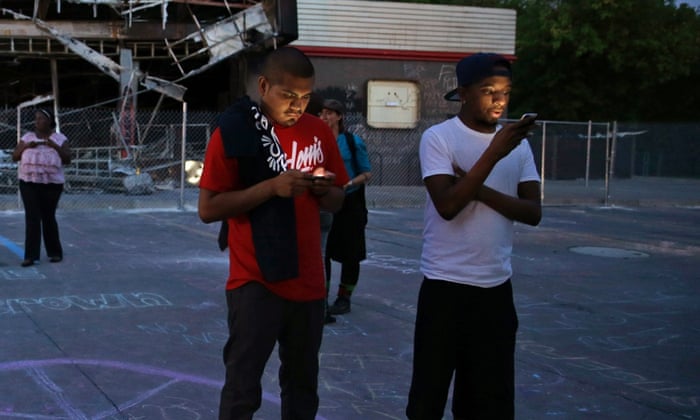
Ferguson’s citizen journalists revealed the value of an undeniable video
Until the police stops treating communities as war zones and people as enemy combatants, keep your phone handy


In Ferguson, Missouri this week, the public has turned the notion of “see something, say something” back on the state, via a digital tool of enormous power: online pictures and video. Their efforts – which began days before reporters descended when Twitter user @TheePharaoh posted pictures immediately after a police officer killed an unarmed black teenager, Michael Brown – have helped bring international attention to both Brown’s death and law enforcement’s disproportionate response to the ensuing protests.

Antonio French, an alderman in nearby St Louis, spent days posting to Twitter pictures and a series of videos of the demonstrations and police actions that he captured on his mobile phone – and was reportedly arrested and then released on Wednesday evening. He is a citizen journalist of the best kind: a credible witness who has helped inform the wider public about a critical matter. Can anyone plausibly doubt that he and the two professional journalists who were briefly taken into custody after police demanded they stop recording were targeted because they were documenting law enforcement actions?

Ferguson isn’t the first example of this kind of citizen journalism, which has been going on for years in any number of other places including Iran, Egypt, Occupy Wall Street and Syria. But the videos, blog posts, tweets, and photos from French and others on the ground have complemented the work of the traditional journalists on the scene – and have reminded us of what is becoming a civic duty in today’s America.