Wednesday, 4 February 2015

Instagram posts not being private

Your ‘private’ Instagram photos may not have been as private as you thought


Millions of ‘private’ photos posted on Instagram have been made available for public viewing due to a loophole on the social media site.

If an Instagram account was set to private but the user posted links to their photos on other social media platforms, those photos became public, meaning they could still be shared by copying their URL.

And the company has appeared to claim that the function was deliberate and not a flaw – though they have been quick to release a patch to resolve the issue.

Another spokesman told MailOnline: ‘In response to feedback, we made an update so that if people change their profile from public to private, web links that are not shared on other services are only viewable to their followers on Instagram.’Quartz said the loophole was the sort of ‘complexity’ ordinary users had to navigate.

BBC3 bid

BBC3 bid: ‘We’re trying to say that there is another way’
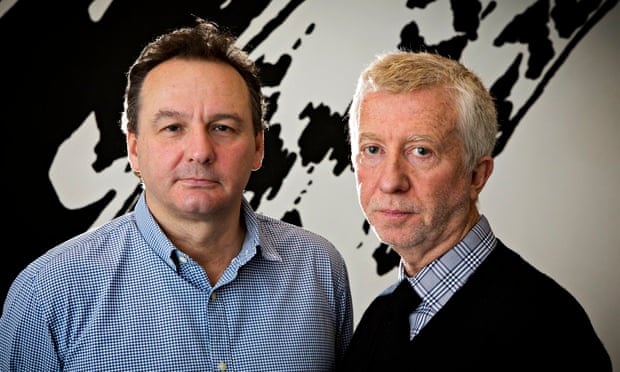
Jon Thoday and Jimmy Mulville detail their plans to buy the channel, answer BBC concerns, and say investors are queuing up


Thoday’s company, Avalon (Russell Howard’s Good News), and Mulville’s, Hat Trick (Have I Got News for You), are both successful independent TV production companies, together turning over more than £100m a year. Coincidentally, that figure of £100m crops up twice more in their embryonic bid to save the youth-focused channel from the low-budget, online-only future that director general Tony Hall plans for it. Avalon and Hat Trick have offered £100m as a one-off purchase price to buy BBC3 – but have also said they plan to increase its commissioning budget to £100m, up at least 20% from its current level.

Taiwan plane crash

TransAsia crash: Taiwan plane in deadly river crash


A plane carrying mostly Chinese tourists has crashed into a river in Taiwan, killing at least 16 people.

Dramatic video footage emerged showing the TransAsia Airways plane clipping a bridge as it came down shortly after take-off from a Taipei airport.

The plane, carrying 58 people, has broken up and the fuselage is lying half-submerged in the Keelung River. Rescue efforts are ongoing

Tuesday, 3 February 2015

Week 19

Top Gear, BBC4 and the watershed: what we learned from Tony HallBBC director general stands byJeremy Clarkson in Radio Times interview and says watershed probably won’t be around in 20 to 30 years


    The 9pm watershed’s days are numbered. “The watershed is still a useful way of judging the content and sensitivities, and taste and decency issues. But has the watershed got a future in 20 or 30 years’ time?
  • Watershed will be going down in the ext 20 - 30 years. This coudl have a mjor effect on teh content that kids see and how they start to view things, as they will be open to more explicit content. This could have a negative effect on young children. 

Week 19 - NDM story

Twitter turns promoted tweets into ad network
Company announces plans to let advertisers promote tweets onto other websites and app


The company has just announced plans to let advertisers promote their tweets on to other websites and apps, in effect turning its ad platform into a full network for posting advertisements across the net.

The company is launching the service with partnerships with Flipboard and Yahoo Japan. Advertisers with promoted tweets, which let a company pay the firm to put a tweet in other users’ timelines, will now be able to pay extra to push the content on to the other two websites entirely.

Post colonialism

Post colonialism

Alvarado - 1987:

Alvarado's theory was that there are four categories/themes that the ethnic minority (black Africans) fall into, these where represented in movies, TV programs and online. These categories are; 
Exotic - Models, music, artist, food.
Dangerous - Crime, gangs, socially dysfunctional. 
Humorous - Comedians, side-kicks, quirky)
Pitied - Poverty. 
In every or a vast majority of TV shows, movies, or online content (online videos/programs) when we see a black African character, one or more of these themes will be portrayed upon the person or people. In British shows such as Top Boy and Bullet boy, the theme of danger is mostly expressed as that is how we tend to see black males in the society. 

Frantz - Fanon - 1925 - 1961:

Frantz - Fanons theory of "Putting on the white mas". This means that black males now act like they are wearing a white mask to fit in to society, whereas in the olden days black slaves would put on white masks to mock on their masters. This has now become a norm in society, where a lot of black males or even people of ethnic minorities will act in a different way so that they feel accepted in society. This can be see very clearly in elite members of society, for example Barack Obama, he acts as if he is a white male as he has to be accepted by a nation of people, and they may not accept him if he doesn't follow this. 

Frantz - Fanon similarly to Alvarado put black males and ethnic minorities in to four groups: 
Infantilize - Such as the 'cute' children of the charity poster. 
Primivitize - The exotic and virile (sexual potency) tribal warriors or bare breasted maidens with a natural sense of rhythm. 
Decivilize - The gangsta, the pimp etc... 
Essentialze - Undifferentiated mass, 'they're all the same to me'. 

These are also themes or characteristics that we see in media when we see black males or other ethnic groups. We see it as the norm, it isn't usually questioned as in society we are used to seeing characters being portrayed in such a way.   

Edward Said - 1978 Orientalism

The main theory that Edward Said came up with is that Europeans divided the world in to two parts, which were the East and the West or civilized and uncivilized. This was said as the Europeans thought that they were superior to everyone else and that they had to civilize the uncivilized. This was mainly laid on the basis or 'them and us' or 'theirs and ours'. 

Yasmin (2004) again

Does it offer a positive or negative view of British Muslims? 

The opening to the film shows a predominantly negative view of British Muslims, this is based on the evidence shown, we see the girl getting changed out of her traditional Muslim clothing and putting on 'Western clothing' this shows that she may be ashamed of being Muslim, which then to the audience portrays that being a Muslim in Britain is something negative. Furthermore looking at the Muslim/Indian actor that is shown, we see that he is very poor and quite uneducated. This can be seen as we see him eating, what seems like peanut butter, with his finger and to heat his tea, he makes a make shift fire outside his house. 

These all give negative views on Muslims in Britain, or British Muslims, as we then see them as being uneducated and we see the culture as something negative. 

To what extent does it reinforce or challenge Edward Said's theory of Orientalism - that the west is superior to the exotic or uncivilized east?

I believe that the opening to the film reinforces Edward Said's theory as when the film starts we see women walking in the middle of the road, and a man sleeping on the floor in his home. Furthermore, when see Yasmin go in to the pub, some of the white males look at her in disgust. This shows that they feel superior to her because she a Muslim, and they are white British citizens. Furthermore as Britain is in the West and Pakistan is in the East it further enforces Edwards theory, as the white males may feel as if they are all civilized and because she is Muslim, she is uncivilized. However this is counteracted when the police see Yasmin driving her car and stop her, she then comes out of the car and tells the police that it is a 35 mph road and then provides them with her drivers license without them asking. Which proves that she is educated and civilized as she knows what is right and wrong. 

My clips & theory relation
       
Clip 1 - Alvarado - Music video https://www.youtube.com/watch?v=r6I2Ek_j_Xc


In this video we see a vast amount of gang culture and very sexual content. Relates to Alvarado's theory of 'danger', and 'exotic' as we see gangs popping gang signs and standing and dancing around each other. Furthermore as it is a black male that is singing/rapping it relates to the theme of exotic and the females that we see are very sexual and one of the two females is also an American black female.


Clip 2 - Frantz - Fanon - comedy show https://www.youtube.com/watch?v=kO-EwelnvxU

In this clip we see a clear view of what Frantz - Fanon says, of "Putting on the white mask". The two comedians that we see talk about how they act white around white people and how they act 'black' around other black Americans. This shows that people act white to feel as if they fit in with society. 


Clip 3 - Edward Said - Film https://www.youtube.com/watch?v=UePZga3wAzE


In this final trailer of East is East, we can see Edward Said's theory being shown of Orientalism. As we see that when the boy from England (the west) to Pakistan (the East) he finds that the people and the ways there are much different, for example when he needs to go toilet, he is told to go in a field. This to a lot of people would seem very 'uncivilized' as in the West people use toilets when they need to go, and not a field. Thus it enforces the theory that the West is more civilized than the East. 

Thursday, 29 January 2015

Post - colonialism

Films:

- Kidulthood 
- Adulthood 
- Bullet Boy
- Anuva Hood 
- Attack the block 
- Rollin' with the nines 
- Sket 
- Shank 
- Ill manors 

TV Programs: 

- Top Boy 
- 55 degrees North 
- Line of duty
- Luther 
- The Real McCoy 

Online - only productions:

- Brothers with no game 
- Venus vs Mars 
- The Ryan Sisters 
- All about the McKenzies 
- Meet the Adebanjos  


To what extent can we apply Alvarado's and Fanon's theories to these films? 
Do they reinforce or subvert typical black stereotypes in British film and TV?


Gone too far 
410 words

Straight away when the trailer to the film Gone too far starts, we hear African music playing and the main character of the film is seen dancing. This goes with one of the relationships that Alvarado has come up with, exotic. This is when traits of music, modelling, and food is associated with non – white males. The Frantz Fanon theory of Primitize can also be applied as he says, “with a natural sense of rhythm”. As we see the boy dancing and the song playing it shows a natural sense of rhythm and as he is dancing to African music, further enforces this point. As the trailer further progresses we see the Alvarado representation of ‘pitied’ , as the main character says to his mother, “ we need a bigger place.” And she replies with, “Am I the queen of England?” from this we as an audience get the feeling that they cannot afford a place that is big enough for all of them to live in.

Then we come to the Frantz Fanons main theory or saying of “Putting on the white mask”. This is seen when Yemis brother is talking to the two girls, and she says, “Move man, we don’t talk to people that don’t speak English.” This could almost show that she is ashamed of her ethnic background and wants to be a white British person, thus putting on the white mask, hiding her ethnic background as she tries to fit in with the white community.

Finally, in the scene were Yemi is talking to the female character a football is kicked at his head, as one of the boys shouts, “Yo Yemi, stay away from my girl bruv.” The boys that are seen when this shot is filmed, shows them wearing snapbacks, tracksuits (low bottoms), side bags, and one boy in the background can also be seen filming what is happening, this fits in to the dangerous representation from Alvarado, as this type of clothing and behaviour can be related to gang culture.

Overall the film can be seen portraying a number of the theories and stereotypes that both Alvarado and Frantz Fanon have come up with. They both reinforce and subvert the stereotypes that have been set against black males in British films, as in the film we see some gang culture, however the main character subverts the traits that are usually associated with black males in British films and TV.